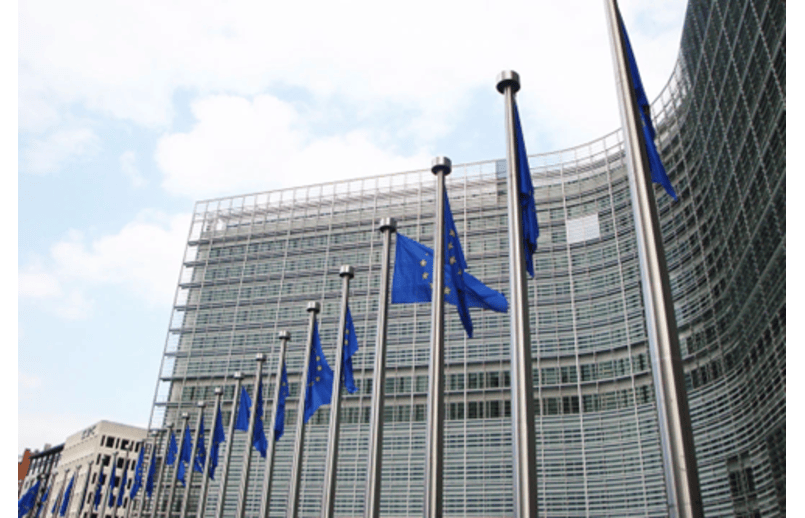
On March 18, the European Commission unveiled EU Inc., a corporate framework allowing entrepreneurs to register a company operable across all 27 Member States in 48 hours, for under €100, with no minimum share capital.
EU Inc., supposedly the starting point of the “28th regime”, seeks to address a real and well-documented problem: European entrepreneurs who wish to scale across EU borders currently face 27 national legal systems and more than 60 distinct company legal forms. For an SME with limited legal budget and lean teams, this fragmentation is a structural barrier that can delay market entry by weeks or months, inflate compliance costs, and tilt the competitive playing field against smaller players.
Symptomatic of this broader failure is the “Delaware flip”, a well-known practice of European founders incorporating in the United States, precisely in Delaware, to access a single, investor-friendly legal framework. According to the Draghi Report (2024), roughly 10% of the EU scale-ups relocate abroad, with approximately 85% heading to the US. Between 2008 and 2021, nearly 30% of European “unicorns” (startup companies valued at over US$1 billion) relocated their headquarters, predominantly across the Atlantic. While these might seem like mere statistics, they actually represent thousands of jobs, tax revenues, and innovation ecosystems that Europe has lost due to structural inertia.
Against this backdrop, the EU Inc. proposal deserves a genuine welcome. The Commission has opted for a regulation under article 114 TFEU, a decision of considerable significance: once approved by the Council and the Parliament, it will apply directly and uniformly across the 27 national legal orders. This is a first indication of the Commission’s responsiveness to the SME communities that have long warned of the inefficacy of a directive, which usually results in more fragmentation under a different label.
On the substance, several features of this proposal are genuinely promising for SMEs. Firstly, the abolition of minimum share capital requirements removes an entry barrier that has historically excluded small businesses from incorporation. Secondly, the once-only data submission principle reduces paperwork across jurisdictions, cutting an administrative drag that usually drains SMEs resources. Thirdly, the simplification of the insolvency framework for innovative startups supports entrepreneurial risk-taking. As the EU seeks to strengthen its competitive position against giants such as the US and China, removing the deterrent of burdensome insolvency proceedings proves vital for dynamism.
And yet, EU Inc. is a corporate law reform, not a comprehensive competitiveness strategy. The most significant operational barriers that SMEs encounter when scaling across the EU, from taxation to labour law, from VAT compliance to regulatory reporting, are explicitly left untouched by the proposal.
The SMEs most in need of simplification are often not the venture-backed tech startups EU Inc. is primarily designed to attract, but established micro-entreprises seeking to enter a neighbouring market or test demand in a second country. For these businesses, the cost of maintaining multiple legal entities is a drag, but the cost of labour law complexity, tax compliance, and regulatory divergence is even greater. EU Inc. addresses the former and leaves the latter intact.
There is also a structural tension in the optionality of the proposal: it does not replace national company forms but adds a 28th regime to the 60-plus existing ones. Optionality is not inherently a weakness, but it risks concentrating benefits among sophisticated founders with cross-border ambitions who are already better equipped to navigate complexity, rather than reaching the businesses that need support most.
EU Inc. is an ambitious and well-constructed proposal. The choice of a regulation, the abolition of the minimum share capital, and the simplified insolvency procedures are all improvements, reflecting the Commission’s correct diagnosis of a genuine problem within the European Single Market. However, the test of any SME policy is not whether it is well-designed in Brussels, but whether it makes tangible differences to the entrepreneur in Cluj, the one in Seville, or the one in Gdansk. By that test, EU Inc. is necessary but likely not sufficient: it removes one layer of corporate law complexity while leaving intact the deeper frictions SMEs face daily. This proposal has the potential to be a meaningful foundation, with the auspices that it be followed by equally ambitious efforts to address the remaining structural barriers that continue to constrain SMEs across Europe.