Accelerating smart SME innovation through collaborations and partnerships

Date: May, 25, 2016 | From 1 p.m. to 2 p.m. - CEST

SMEs face the permanent challenge of executing with speed and agility with limited financial and human resources. Effective collaborations and partnerships enable SMEs to leverage their own resources and achieve more with less. However, whether working with other companies or post-secondary institutions, it is critical that there be alignment on expectations and objectives. This session will discuss techniques and considerations for establishing an effective collaboration-oriented SME.


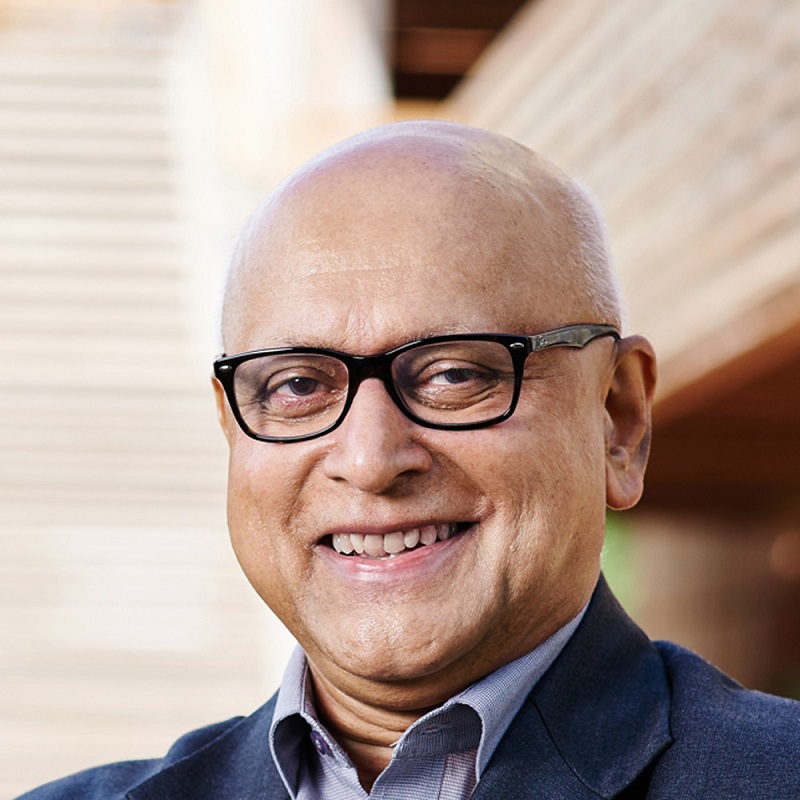
Relator: Mr. Carl Byers

Co-Founder and Chief Strategy Officer, Contextere, Canada

Carl Byers applies thirty years of experience in modeling and simulation, virtual environments, and augmented reality to software applications that improve knowledge-based productivity enhancement and decision making in complex distributed organizations. Throughout his career, he has actively developed strategic relationships between companies and academic institutions to accelerate the development of new products and reduce the barriers to commercialization. As co-founder and Chief Strategy Officer at Contextere, Carl drives integrated R&D, product development, and collaborative partnerships that leverage the Industrial Internet of Things (IIOT) to empower the 21st century workforce. Carl holds a Master’s in Business Administration from the Schülich School of Business in Toronto, a Master’s in Human Security & Peacebuilding from Royal Roads University in Victoria, and a Bachelor’s in Applied Science in Engineering Physics from Queen’s University at Kingston.

Developing and managing SMART SMEs in SMART environments

Date: June, 23, 2016 | From 1 p.m. to 2 p.m. - CEST

Smart SMEs operate best in smart environments, where an effective ecosystem of smart people, smart organisations and smart infrastructure are best realized. The urban environment is generally perceived to offer real opportunities for such an ecosystem to thrive. So how can smart SMEs make the most of such ecosystems to thrive, prosper, improve their bottom line, and contribute to society? Smart technologies, smart cities and smart enterprises appear to have acquired a level of significance which may be in keeping with the rapid advances made on the technology frontier. How we keep up with the whirligig of software, sensors, apps, artificial intelligence, nano and other technologies, has become a critical issue for entrepreneurs, managers, and policy makers. On the one hand we have this extraordinary proliferation of technologies, and on the other we find the rather confused response that we make as entrepreneurs, decision makers and citizens in shaping new ventures that can mobilise these resources creatively in especially urban environments. Somewhere in the middle lie opportunities. In this presentation I will explore critically the urban context of smart, productive entrepreneurial responses to the issues stated above and how creative managers can derive optimal value for their businesses, for themselves, for their customers, and for the wider society in which they are embedded.


Relator: Prof. Jay Mitra

Chair, International Entrepreneurship Forum and Professor of Business Enterprise and Innovation, Essex Business School, University of Essex, United Kingdom

Jay Mitra is Professor of Business Enterprise and Innovation, Director of The Venture Academy and director of International Development at Essex Business School, University of Essex, UK. He has acted as a Scientific Adviser to the OECD (Organisation for Economic Cooperation and Development) and is a Visiting Professor at University Externado in Colombia and EDHEC Business School in France. Jay Mitra also leads the International Entrepreneurship Forum (IEF) a unique network and forum for researchers, policy makers and business practitioners working on entrepreneurship, innovation and regional development. He has written widely on the subjects of entrepreneurship and innovation in refereed journals worldwide and won several best research paper awards in the UK and the USA. He has represented his institution as a keynote speaker in distinguished international policy, practitioner and research forums, and has worked with leading agencies such as the OECD, UNCTAD, UNIDO, the EU, and with several government agencies worldwide. He is the editor of the ‘Journal of Entrepreneurship and Innovation in Emerging Economies’, published by Sage and he sits on the editorial board of various referred international journals.

Green entrepreneurship & women and the essential role of public-private partnerships to encourage innovation

Date: April, 27, 2016 | From 1 p.m. to 3 p.m. - CEST

This webinar will treat the current status quo of green entrepreneurship with a special focus on implications for women intending to launch or foster a business. The question on who shall be responsible for driving the inclusion of more women in the Southern Mediterranean workforce will animate the discussions together with the query on how our shared responsibility to invest in and strengthen green entrepreneurship can be implemented by Governments, NGOs, employers and young women themselves. As an enterprise is a risky and complex venture, public authorities can help entrepreneurs minimize the risk and grow by providing good framework conditions, financial and non-financial support services. To do this, they can put dedicated intermediary organizations in place. Public-private partnerships are essential to encourage innovation and drive economic growth in women-led businesses. The extended Q&A session will be a suitable occasion to further discuss opportunities generated through the EUROMED Invest Project, coordinated by ANIMA Investment Network and to connect with peers coming from all over the world.


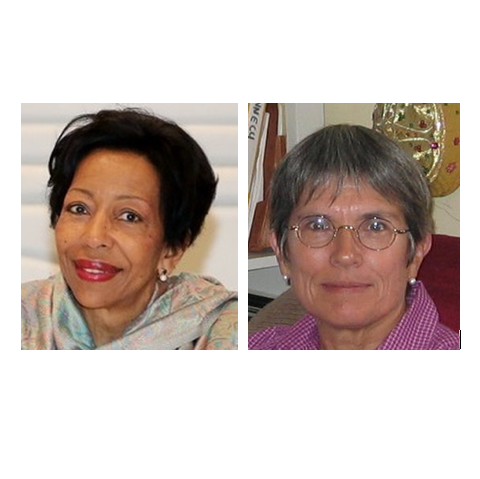
Relator: Ms. Fatma M'Selmi, Mr. Christian Saublens and Mr. Oussama Dahmani

Laur'us Consulting, EURADA and Anima Investment Network

Fatma M’Selmi has a Master degree in Strategic Management. She has over 10 years of management experience with EU institutions and monitoring of complex consulting projects. With the German Cooperation for development (GIZ), she worked as an innovation expert and innovation component manager. She also worked on economic women development and developed strategies, managed and supervised their implementations in partnership with Tunisian Ministries and the European Union. At the national level, she developed a pilot Innovation management training course and an innovation toolbox after studying the needs of Tunisian SMEs. She also worked with several enterprises to implement the innovation management system with focus on gender matters.

Christian Saublens is Belgian and has an experience of more than 30 years in lobbying the European Community authorities. He is the Former Executive Manager of EURADA, the European Association of Development Agencies. Christian helped the creation of EBAN, the European network promoting the stimulation of informal venture capital at regional or national level. Christian has written several papers regarding the impact of EU regulations on regional development and the role of development agencies in Europe. Christian is the chairman of the S³ Mirror Group, the expert group of the Smart Specialisation Strategy Platform of the European Commission.

Oussama Dahmani is an International Development Expert with more than 12 years’ experience in the fields of private sector support, economic inclusion and business environment with emphasis on innovation and entrepreneurship. Oussama is in charge of coordinating EUROMED Invest, one of the major European programs launched end 2013 and aiming at supporting the private sector and improving the economic relations in the Euro-Mediterranean area.

The countries doing the most to advance global innovation

Date: March, 22, 2016 | From 2 p.m. to 3 p.m. - CET

Robust innovation is essential for economic growth and social progress around the world. Innovation is a global public good, as innovations in one nation spill over beyond the country’s borders to benefit all the world’s citizens. Yet innovation suffers from a collective action problem, as countries traditionally pursue innovation initiatives from their own narrow economic goals, or, worse, disadvantage innovators in other nations in an attempt to favor their own enterprises. Thus, how nations decide, individually and collectively, to pursue innovation-based growth strategies holds critical implications for the global innovation system. Yet until now, most studies of innovation policy looked only at how nations’ policies affect innovation in their own country. In contrast, ITIF’s report assesses 56 countries – which comprise almost 90 percent of the global economy – on 27 factors reflecting the extent to which their economic and trade policies contribute to and detract from innovation globally. During the webinar both experts will elaborate on which nations are doing the most to bolster global innovation (a combination of more effort on policies that support innovation and less on policies that harm it) and discuss the correlation between countries’ contributions to global innovation and their levels of innovation success.


Relator: Mr. Stephen Ezell and Mr. Adams Nager

Vice President, Global Innovation Policy and Economic Policy Analyst, The Information Technology & Innovation Foundation - ITIF, USA

Stephen Ezell is Vice President, Global Innovation Policy at the Information Technology and Innovation Foundation (ITIF), a Washington-DC based technology and economic policy think tank, where he focuses on science, technology, and innovation policy as well as international competitiveness, trade, and manufacturing policy issues. He is the co-author with Dr. Robert Atkinson of Innovation Economics: The Race for Global Advantage (Yale, September 2012) and a co-author of Innovating in a Service-Driven Economy: Insights, Application, and Practice (Palgrave McMillan, November 2015). Mr. Ezell holds a B.S. from the School of Foreign Service at Georgetown University, with an Honors Certificate from Georgetown’s Landegger International Business Diplomacy (IBD) program.

Adams Nager is an economic policy analyst at the Information Technology and Innovation Foundation. He researches and writes on innovation economics, manufacturing policy, and the importance of STEM education and high-skilled immigration. Adams holds an M.A. in Political Economy and Public Policy and a B.A. in Economics, both from Washington University in St. Louis.

Financing SMEs and Entrepreneurs: trends, issues and policies since the 2008 global financial crisis

Date: November, 25, 2015 | 1 p.m. - 2 p.m. - CET

Access to financing continues to be one of the most significant challenges for the creation, survival and growth of SMEs, especially innovative ones. The financial crisis of 2008 hit them particularly hard. Governments responded at the time with some tried and true remedies (e.g. increased loan guarantees) as well as some innovative programmes such as credit mediation. Traditional bank finance is still the most common source of external finance for many SMEs and entrepreneurs, but it poses challenges to these firms and maybe ill-suited for newer, innovative and fast growing companies. Broadening the range of financing instruments available to SMEs and entrepreneurs has now become a primary concern and challenge for policy makers, in order to enable SMEs and entrepreneurs to play their role in growth, innovation and employment. In our webinar we will cover the past and more recent trends, issues and policies in SME finance.


Relator: Mme Marie-Florence Estimé & Ms. Lorraine Ruffing

Former Deputy Director at the OECD Centre for Entrepreneurship, SMEs and Local Development (CFE) OECD, France | Former Chief, Enterprise Development at UNCTAD

Marie-Florence Estimé is the former Deputy Director of the OECD Centre for Entrepreneurship, SMEs & Local Development (CFE). She has been responsible for the OECD Working Party on Small and Medium-sized Enterprises (SMEs) and Entrepreneurship (WPSMEE) since its foundation in March 1993. She has developed her activities and studies on SME issues and policies in OECD countries, in the areas of globalisation, innovation and competitiveness, employment and job creation, high growth SMEs, ICTs and e-business, management training, women’s entrepreneurship. She also developed an exchange of information and co-operation with non-member economies, international organisations, the business sector and NGOs and managed the preparation of the two OECD Ministerial Conferences on SMEs (Bologna 2000 and Istanbul 2004) and other global thematic conferences and their outputs. At the OECD, Mme Estimé also worked at the Development Centre, the Economics Department and the Directorate for Science, Technology and Industry where she prepared and/or contributed to a number of studies. Before joining the OECD, she worked at the French Ministry of Economics and Finance (Direction de la Prévision). Since retirement, she has continued to work in the areas of SMEs and Entrepreneurship. She is currently a Board Member of INSME and several NGOs and non-profit associations: e.g. OPEE-MENA (Observatoire des Pratiques des Entrepreneurs et des Entreprises dans la Région Afrique du Nord et Moyen Orient - Observatory for Entrepreneurs and Enterprises Practices in MENA countries), DSF (Développeurs sans Frontières), the OECD WHG (the OECD War on Hunger Group). She is also carrying out a housing and agricultural development project in the private sector in Haïti.

Lorraine Ruffing earned a Ph.D in trade and development economics from Columbia University in New York. She has taught economics in universities in New York, Santiago and Geneva. She entered the United Nations in 1981 and worked for 5 different UN agencies and served in a number of countries including Chile, Mexico, Uzbekistan and Venezuela. During her time at UNCTAD (United Nations Conference on Trade and Development), she directed its Branch on Enterprise Development in the Division on Investment and Enterprise. The main focuses of her work were on small enterprise development, corporate governance and corporate social responsibility. She formulated a private sector development (PSD) strategy for Africa for the United Nations Development Programme which was based on best practices identified during eight expert meetings and projects in 31 developing countries which support entrepreneurs. Since retirement she has continued to work in the areas of small business financing, corporate governance, and corporate social responsibility. She was the Senior Consultant for the Organization for Economic Cooperation and Development (OECD) and assisted in the production of the annual publication, Financing SMEs and Entrepreneurs: An OECD Scoreboard. She has recently co-authored a book on the UN’s attempt to draft a code of conduct for transnational corporations: UN Centre on Transnational Corporations: corporate conduct and the public interest by Khalil Hamdani and Lorraine Ruffing. They are also co-authors of the recent article: Lessons from the UN Centre on transnational Corporations for the Current Treaty Initiative.

Solving the ‘business plan puzzle’ – Successful approaches to raise money from investors

Date: December, 15, 2015 | - CET

All entrepreneurs and ”intrapreneurs” (those that launch projects inside companies) need to sell their ideas to investors in order to get resources for their projects. Those projects usually have a great potential but the majority of entrepreneurs often fail to develop it to the maximum extent. Most of them fail to convince investors. Why? Lack of money from investors or companies? Lack of skills of investors? No. Too much risk!  
The common denominator of converting innovation into business is a good business case. A good business case is characterized by the existence of a market for products or services derived from the innovation. The innovative solution also needs to be better than any alternative With the collaboration of solutions and it should be possible and easy for the firm to produce and distribute the solution to the customers. What entrepreneurs and “intrapreneurs” tend to forget, is that the best idea in the world with zero execution, is worth zero. It is the dilemma between potential and reality. Potentially all those projects are great but in reality there are several RISKS that will turn into a bad execution. Furthermore negotiating the terms of investment and mitigating the risks of investors represent major concerns for entrepreneurs. After briefly introducing the main opportunities offered by the EUROMED Invest project, the webinar will cover most important methodologies and approaches for entrepreneurs to raise funds, gain investors’ trust by exploring four ways of funding innovative projects: the “Hard”, the “Expensive”, the “Difficult” and the “Smart” ways. The audience will benefit from a 30 minutes Q&A session to further discuss project initiatives by taking advantage of the expert knowledge and of the networking opportunity offered by the interactive platform. This session is part of a series of webinar organized as in-depth follow up on the Training on innovation and entrepreneurship for start-ups, young  entrepreneurs/women and diaspora organized within the frame of the EUROMED Invest project, coordinated by ANIMA Investment Network.


Relator: Dr. Uffe Bundgaard-Jørgensen & Mr. Paulo Andrez & Ms. Violène Mendonça

CEO at InvestorNet-Gate2Growth, Denmark | Angel Investor and President Emeritus of EBAN, Belgium | Communication Officer at ANIMA Investment Network

Dr. Uffe Bundgaard-Jørgensen is Chairman of the Danish Energy Regulatory Authority and hold a MA (econ) & Ph.D. from Copenhagen University & Danish Technical University. He also has 10 years’ experience as CEO for Danish Venture Capital Fund;15 years’ experience with EU projects via InvestorNet. He is Chairman for H2020 SME Innovation Advisory Group (D.G. Research) and Advisor H2020 SME instruments application and evaluation process. Member of Strategic Advisory board for BioBased Industries Joint Undertaking and Chairman for INCOMERA advisory board (Nano- technology calls), his company InvestorNet – Gate2GrowthPartner is in 6 different EU projects.

Paulo Andrez is an angel investor with an active portfolio of 14 companies. One of his investments reached 25 million euros in revenues within the first year, for which he received an award “Best European Angel Investment” in 2012. Paulo is a Board Member of Entrepreneurship Agency DNA Cascais, which supported more than 250 startups in the last decade, and a Board Member of FNABA, the Portuguese Business Angel Federation. Paulo was appointed President Emeritus EBAN, European Business Angel Network, after serving as President until 2014. Since 2012, Paulo has been working with a number of European governments in the field of Early Stage Investment policies and Business Angels Co-Investment Funds design. He is also a member of the European Commission Advisory Group “Innovation in SMEs”. Paulo is an IT Engineer and has a MBA from the Nova University in Lisbon. He has a background as serial entrepreneur and is frequently invited as speaker, guest lecturer and expert in innovation, entrepreneurship and early stage investment.

Violène Mendonça is the communication manager of the EUROMED Invest project at ANIMA Investment Network in Marseille. In charge of the program level communication, she is also coordinating the visibility and monitoring the dissemination of the results among the EMI community since December 2014. Prior to this, she held different positions as a communication officer for a wide range of institutions in Paris, Bucharest, Montreal and Los Angeles. Violène Mendonça holds a Master degree in History Communication, Business and International Affairs from la Sorbonne.

Discussing the success factors on how innovation systems can better address the Participation to the European Research Area

Date: October, 22, 2015 | 1 p.m. - 2 p.m. - CEST

By benchmarking against the international competitors, Europe as a whole needs to significantly advance in research and innovation performance in order to make the European Union the most dynamic and competitive knowledge-based economy, as the Europe 2020 Strategy strives for. There are countries lagging behind concerning the effectiveness of exploiting EU funded programmes in the field of R&D&I. The obstacles can be sought among local conditions, resources and assets faceting a specific system.
Thanks to the extensive policy learning exercise to identify barriers and potential gaps, the MIRRIS initiative today is able to provide a portfolio of suitable intervention schemes for EU Member countries (with a special focus on the 13 MIRRIS target countries including Bulgaria, Croatia, Cyprus, Czech Republic, Estonia, Hungary, Latvia, Lithuania, Malta, Poland, Romania, Slovakia and Slovenia). This webinar will summarize main findings on personal/motivational, structural and organizational barriers encountered in the countries to take part in EU Research Programmes, present common challenges for the implementation of a roadmap to overcome the same and share the MIRRIS methodology to give advice to partner countries by offering a forum discussion on the success factors to find solutions and monitor their impact. Thanks to the participation of MIRRIS Coordinator, META Group concrete examples of suggested activities will be shown in detail to disseminate the methodology that the MIRRIS project adopted to identify priorities for the countries allowing to strengthen strategic partnerships with European Universities and other stakeholders, participate in the lessons-learned discussions and be briefed about the MIRRIS Coaching activities that will be made available to the 13 MIRRIS target countries in the next months. Your participation to this webinar will allow you to get access to a wide range of precious insights from the policy dialogues organized in the 13 MIRRIS target countries and benefit from the SWOT analysis results as well as from the mutual learning experience among key stakeholders, namely research, innovation and institutional actors from all over Europe. The Q&A session might also be a perfect occasion to discuss your ideas about an action plan for your country (if not part of the 13 MIRRIS target countries) and take advantage from already validated lessons learnt for a successful up take to make the difference in Europe and abroad.


Relator: Mr. Andrea Di Anselmo

President & Founding Member of META Group, Italy

Andrea Di Anselmo is a founding member and Vice-President of META Group and has the key role regarding the Business Unit Economic Development, as a Senior Consultant. Taking in consideration his professional experience and key areas of expertise, Andrea Di Anselmo focuses on innovation and Regional policy, representing META on all the major assignments. Mr. Di Anselmo supervises implementation of assignments and interacts with clients as project director and helps promote the company within international associations and bodies, bringing a high level contribution through his activities as Senior Expert. Also an active Member of the Board of Directors in several organizations, such as ISRIM (Research Institute dealing with Advanced Materials), TI (European Association for Innovation and Technology Transfer), Sviluppumbria (the RDA of the Umbria Region) and IBAN (Italian Business Angels Network), Mr. Di Anselmo expertise is a strong asset in the field of innovation support and services, company creation and access to early stage finance.

How to Manage Innovation Processes Successfully – Insights for Young Entrepreneurs, Start-ups and Diaspora

Date: September, 29, 2015 | 1 p.m. - 3 p.m. - CEST

How to manage Innovation Processes successfully as a young entrepreneur, a start-upper or in diaspora? This webinar treats most important methodologies and gives advice on how to successfully run a business, be more creative, strengthen contacts with the R&D environment, manage the innovation process internally and take advantage of strategic networking to exploit all opportunities concerning access to finance and innovation through internationalization. The Business Model Canvas Exercise will be presented as a hands-on tool to foster understanding, discussion, creativity and analysis. A specific focus will be given also to topics as crowd funding and crowd sourcing as well as on internationalization of enterprises by touching all implications for young entrepreneurs to reach out successfully to new clients, knowledge owners and business partners outside the country. The Lean Start-up will be briefly presented to advise participants on how to create a more successful entrepreneurial business. Tips and tricks on successful pitching will be shared with the audience being able to take benefit of the extended Q&A session at the end of the webinar (30 minutes). A dedicated time slot will also focus on women entrepreneurship in  particular. This webinar is an in-depth follow up on the Training on innovation and entrepreneurship for start-ups, young entrepreneurs/women and diaspora organized within the frame of the EUROMEDInvest project.


Relator: Dr. Atef El Shabrawy & Mr. David Tee

Egypt & Belgium

Dr. Atef benefits from more than 25 years of experience in entrepreneurship, SME’s banking (Islamic & conventional) and social innovation. Currently advisor to the International Entrepreneurship Academy-Centennial Fund-KSA, and advisor for GESR-Social Innovation Center, Cairo-Egypt. Also SME’s advisor to the Federation of GCC Chamber of Commerce, KSA. He also participated in the design of the National Innovation System in Egypt in 2005.

David Tee is a serial entrepreneur, consultant and innovator with over 25 years professional experience in a variety of environments from Cambridge-based IT start-ups to Silicon Valley-based innovation consultancy to EU-funded project management. He has founded three companies, incubated new businesses, commercialised technology and consulted to both the public and private sectors. Working with EBN, David has supported the Quality Team in developing new tools for BIC benchmarking, with the Project Team developed the proposal for an FP7 Social Innovation Incubation project, under EuropeAid projects advised the EU-funded SRTD and EJADA projects in Jordan, supporting research, technology commercialisation, innovation and establishing a network of innovation centres.

Protection of Non-Agricultural Geographical Indications

Date: August, 5, 2015 | 1 p.m. - 2 p.m. - CEST

High quality products coming from a particular territorial area are not only relevant in the agricultural sector but also in the handicraft, clothing, furniture and design sectors. These products are characterized by unique details and traditional production methods, often passed down from generation to generation, which deserve respect and protection like the agricultural Geographical Indications (GIs). The European Commission undertook a public consultation about the opportunity to take appropriate measures in this area at Community level. Two alternative solutions have been highlighted: harmonizing the legislation of individual member States or creating a unified and independent system of protection for non-agricultural GIs. Which are the future scenarios? GIs for non-agricultural products could represent a guarantee for consumers and a great economic resource for craftsmen.


Relator: Mr. Elio De Tullio

Managing Partner & IPR Attorney at De Tullio & Partners, Italy

Managing Partner of De Tullio & Partners. Attorney-at-Law. Admitted to the Bar in Italy since 1994. Registered European and Italian Trade Mark & Design Attorney. Recently nominated INSME Board Member. Deputy Secretary General of the Italy-Argentina Chamber of Commerce (CaCIA) and member of the Board of Directors of the Italy-Dominica Chamber of Commerce. Legal advisor for Istituto di Economia dei Media (Fondazione Rosselli) and Fondazione Valore Italia of the Italian Ministry of Economic Development. Representing the International Trademark Association (INTA) as expert in the working groups set up by the OHIM for supporting the activities of the EU Observatory on infringements of IPRs and Chair of the homonymous Task Force. Italian member of the Intellectual Property Commission of the International Chamber of Commerce (ICC) and Chair of the Task Force on IP Infringement on the Internet. Cooperating as an expert with the European Commission, in particular with DG Enterprise & Industry, DG Enlargement, DG Research & Innovation and DG Market. Author of several publications and articles on Intellectual Property and IPR Enforcement. Among others, he was also editor and main author of the publication “The intangible wealth – Intellectual Property as an acceleration factor in the audiovisual market” published in 2011 by RAIZONE – ERI. Co-Author of Prof. Galli’s Commentary on Italian and European IP Law. Member of INTA (Chair of the EU Observatory Joint Task Force in the Anti-Counterfeiting Committee), ECTA (member of the Geographical Indications Committee and the Publication Committee), AIPPI, ALAI, ORIGIN, IAEL, ICC.

Innovation, Israeli Style

Date: July, 15, 2015 | 1 p.m. - 2 p.m. - CEST

Imagine the world without drip irrigation, flash memory, voicemail, cherry tomatoes, computer firewalls and more. All these inventions come from Israel, an 8 million person, 20,000 sq.km. country which is 453 times smaller than the US and comparable in size to Fiji, Slovenia and El Salvador. With the highest density of start-ups in the world, Israel has become known as the “Start-Up Nation” and Tel Aviv is now ranked second to Silicon Valley among the world’s start-up ecosystems (The Economist/GE Lookahead, Dec 2014). With US$ 15 Billion in exits, 2014 was a record year for Israel’s innovation ecosystem. $3.4 Billion in venture capital were invested in 688 companies, putting the per capita investment at almost three times the US figure, with absolute venture investment second only to the US. With 6,000 active technology companies across diverse sectors, it is no wonder that multinationals flock to Israel to acquire companies and establish R&D centres, more than 300 currently. How did a small, young, geographically isolated country with no natural resources achieve this feat? What lessons may be relevant to other countries, companies and individuals? Nava Swersky Sofer, the innovation guru quoted in the NY Times bestseller ‘Start-Up Nation’ and an INSME board member, will share the secrets of success.


Relator: Ms. Nava Swersky Sofer

President & Founding Board Member of the International Commercialization Alliance, Canada & Founder of NanoIsrael, Israel

Nava Swersky Sofer, an entrepreneur, venture capitalist, senior executive, innovation & technology commercialization expert with 25 years of international experience, is recognized as a leader in the fields of innovation, venture capital and technology transfer and is a frequently-invited speaker on these topics. In addition to company boards and international consulting, she is currently President & Founding Board Member of the Toronto-based International Commercialization Alliance; Founder of NanoIsrael, the international nanotechnology conference & exhibition, an adviser to the Israeli government on innovation and international R&D collaborations and an adviser to the United Nations’ World Intellectual Property Organization (WIPO) on innovation. She is the Israeli delegate to OECD’s Business & Industry Advisory Council (BIAC) nanotechnology committee and development/innovation network, a board member of Rome-based INSME, the International Network of SMEs, and of the Brussels-based Knowledge Economy Network. She is a visiting professor at IE Business School in Madrid, a member of the Board of Governors and of the 11-person Executive Committee of the Ruppin Academic Centre, one of Israel’s leading colleges, and was recently named as one of the 500 leaders pre-selected (of over 8,000 candidates) to serve on the boards of directors of government-owned corporations. She is often quoted on Israeli innovation models, including in the best-selling book “Start-Up Nation”.