IP Portfolio Added Value Tools

Date: July, 11, 2018 | From 1 p.m. to 2 p.m. - CEST

While Intellectual Property is a term increasingly used nowadays and it is essential to reap the benefits of innovation, it seems that organizations usually use informal processes when developing a portfolio of technology, even if it is built with a few patents or technologies. Therefore it is necessary to know the tools or methodologies that can be used to organize and commercialize IP. The webinar will focus on 4 main factors that are important to consider in order to create value for a business:

  • Internationalization of the portfolio, selecting the inventions with more potential to be transferred and the ones that have to be abandoned in order to reduce cost of maintenance fees;
  • Diversification, detecting the patents, projects of R&D or knowledge (processes or methods) that can be exploited in other sectors of application;
  • Detection of new opportunities, continuously evaluating the market in order to detect new technologies to add to the commercialization portfolio;
  • IP Strategy, establishing the roadmap of each technology and the different steps to the commercialization stage.


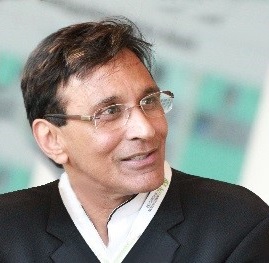
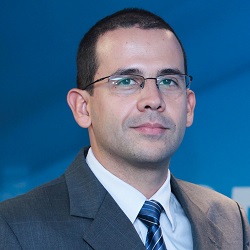
Relator: Dr. Lídia Aguilera

Knowledge Transfer Manager, Knowledge Innovation Market - KIM, Spain

Technology transfer professional with a strong track record of academic and professional achievements and experience in leading technical teams. Lidia has a PhD in nanotechnology and has over 10 years of international experience in both private and public research. She developed her scientific career in prestigious centers of Belgium and Spain and is still linked to research as a evaluator of R&D projects for the European Commission. Over the past five years, she has worked in the private sector as technology transfer manager, negotiating and getting projects with multinational companies, SMEs, and public agencies and managing a highly qualified team.

The Art of raising money for SMEs

Date: June, 12, 2013 | From 1 p.m. to 2 p.m. - CEST

For investors, the four key elements of any successful business are: a good idea, an excellent team, a bigmarket, and money to do it right. If you ask a business: Are you looking for money? 99 % will say yes! Regardless if they are in early, growth or mature stage. The process of raising money is undergoing a transformation, and in this Webinar we will go through the different routes available today. We will cover strategies like Crowd Funding, Accelerator Programs, “LeanStart, and “MVP” start-ups. The Webinar will also include ”The ten key factors for getting outstanding results in the process of raising money.”


Relator: Mr. Amir R. Raveh

nvestor and Entrepreneur | Founder and CEO of MG Equity Partners (UK) | Managing Partner of the Virtual EXelerator, EAI, Belgium

As a Founder and CEO of the British investment house MG Equity Partners raised US$250Million, and specialized in setting innovation and entrepreneurship centers around the world. As a Lecturer at leading Universities, created the E-Mindset model which focuses on developing the entrepreneurial mindset. Founder & Ex CEO of Media Call UK Ltd, sold in 2003. He holds a MBA from Middlesex University in London.

Innovation and Technology Transfer in SMEs

Date: April, 23, 2013 | From 1 p.m. to 2 p.m. - CEST

SMEs represent a large reservoir of jobs. More must be made so that they can better exploit the global markets and create new activities and jobs. In Italy, more than 10% of SMEs would become more competitive if they engaged in relevant R&D (Research & Development). Based on this recent book From Science to Business (www.sciencetobusiness.ch), Dr Georges Haour presents the specific aspects of SMEs innovating and benefitting from technology transfer, mainly coming from Universities, or public research, such as CNR. One aspect is that SMEs must effectively use R&D/Innovation as a strategic tool; second, collaborative work and multi-company projects can be used to share cost and risks; third, websites can be used to identify problem-solvers; finally, Universities and public research may offer relevant knowledge and technical expertise.


Relator: Dr. Georges Haour

Professor of entrepreneurship, innovation management and technology commercialisation, International Institute for Management Development, Switzerland

Dr. Georges Haour is Professor at IMD in entrepreneurship, innovation management and technology commercialisation. For several years, he has been associated with the incubator/innovator firm Generics (now Sagentia), in Cambridge, UK. He is an adviser to firms & organisations on effective R&D/innovation management for competitiveness and growth. He is on the board of several companies and worked as an expert to evaluate Italy’s CNR. Born and raised in Lyon, France, he graduated from the higher school of chemistry ENSCP, Paris. He has a Master of Sciences (New York) and a Ph.D in Chemistry & Materials Science from the U. of Toronto, Canada. Dr. Haour has 8 patents and four books. His latest book is From Science to Business (Palgrave, London, 2011) on technology transfer.

What Kind of Innovative Firm Are You?

Date: May, 14, 2013 | From 3 p.m. to 4 p.m. - CEST

Innovation is a hot topic right now for organisations of all sizes. Those that are trying to improve their innovation capability have no shortage of  resources available to them. But how can you tell which tools and  approaches are right for your specific organisation? I am doing research work right now which looks at the various types of innovative firms that exist. In this webinar, I will explain how to figure out which type of innovative organisation yours is, and give you some tips on how to identify the tools that will be most useful to you.


Relator: Mr. Tim Kastelle

Senior Lecturer - Innovation Management, UQ Business School, The University of Queensland, Australia

Tim Kastelle is a Senior Lecturer in Innovation Management in the School of Business at The University of Queensland. He teaches, researches, writes, consults and blogs about innovation. Learn more at http: timkastelle.org

The social media based innovative services: the new value creation drivers

Date: March, 27, 2013 | From 1 p.m. to 2 p.m. - CEST

The Social Media Innovation is a new knowledge production model, based on the full integration of the social networks and tools onto the internal, and the external context of the organisation. The low cost external communication tools -easy to use and share- like online communities, or processes like the viral marketing are changing the way organisation are structured and are creating value. The boundaries of the “old” organisation are now questionable, a new way of generating value is emerging.
The Social are also part of new and innovative business processes which is generating a new professional profile in the organisation: the Social Network builder who uses social networks, such as Twitter, Linkedin and Facebook to identify, satisfy and create new needs and clients. These new professional figures, other than managers and IT experts, are the new protagonists of the Social Innovation.


Relator: Mr. Aleardo Furlani

Founding Director, INNOVA, Italy

Aleardo Furlani, CEO and founder of INNOVA S.p.A., graduated in Law “summa cum laude” (with highest honors), University of Naples, holds an MBA from IESE- Barcelona. After an experience as Senior associate for MAC Group/GEMINI Consulting Group from 1987 to 1992, where he carried out strategy formulation consultancy for leading Italian corporations in the Space Industry Sector, he founded INNOVA in 1993 to support EU companies and Universities in the implementation of their exploitation of R&D results. With over 20 years of experience in business strategies, international marketing and innovation financing, Aleardo Furlani assists industrial and research organisations in the commercial exploitation of technologies and the valorisation of R&D results in Europe and in South Mediterranean Countries (Tunisia, Algeria, Morocco, Lebanon ,Syria, Egypt): since 2006 he is head of 2 European Investment Bank Technical (EIB) Assistance Projects in Morocco and Tunisia.

Strengthening Sustainability of SMEs through Resource Efficiency

Date: November, 18, 2014 | From 2 p.m. to 3 p.m. - CET

Using the proven Resource Efficiency (RE) approach SMEs are able to reduce or even eliminate wastage of natural resources (such as energy, water, chemicals and materials) within their processes and hence reduce their impact on the environment while saving money. Several case studies are presented to establish a clear and compelling business case in favour of RE as applicable to manufacturing as well as service based SMEs. The approach is explained in brief and a typical project structure is elaborated.


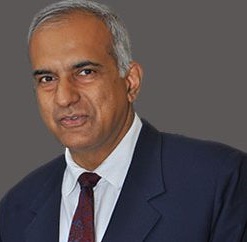
Relator: Mr. Rajat Batra

CEO, STENUM Asia, India

Rajat Batra is passionate about empowering small and medium sized enterprises (SMEs) to improve profitability and to achieve sustainable growth through the Resource Efficiency (RE) approach. He leads the team at STENUM Asia Sustainable Development Society (an organisation he co-founded in 2007) in training, consultancy and implementation support efforts for enterprises. He has been actively practicing RE at various levels for nearly a decade. He has undergone extensive training on sustainable development in Europe. He has more than 20 years of experience managing manufacturing operations and handling international collaborations for SMEs, also as an entrepreneur. Thus, he brings to STENUM Asia a deeper understanding of the issues and challenges SMEs face, thereby customising the services to deliver high value to the enterprises. With a strong technical background (B. Tech from IIT-BHU and M.S. from The Ohio State University, USA) he is able to analyse and add value for process optimisation in various enterprises across sectors.

The Centennial Fund’s Business Model to support Entrepreneurs in Saudi Arabia and abroad

Date: December, 16, 2014 | From 1 p.m. to 2 p.m. - CET

Many young people suffer from the challenges they face when they want to start their own business. After The Centennial Fund’s studies and experiments in addition to access to the world’s best experiments, we found that the best model is to provide integrated services that contribute to the reduction and limitation of these challenges. TCF’s business model is a distinctive model globally, taking young people and helping them develop their ideas through prior training courses on bright ideas, panel discussions passing through feasibility studies, specialized courses, and facilitating government procedures until the project expands later. TCF does not only do this, but it also works on marketing entrepreneurs and spreading their success stories locally and globally through G20 YEA and international competitions. The session will shed light on TCF’s model, the reasons for its success, and its role in helping entrepreneurs.


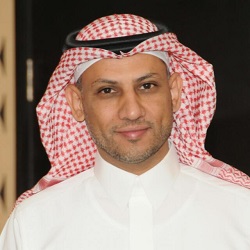
Relator: Mr. Sultan Al-Shuwayeb

GM Assistant, Sector Head of Non-Financial Services, The Centennial Fund, Saudi Arabia

Sultan Al-Shuwayeb has rapidly built a reputation as one of the leading authorities on entrepreneurship in the Middle East. As the Assistant General Manager of Saudi Arabia’s flagship entrepreneurial incubator, The Centennial Fund (TCF), Mr. Al-Shuwayeb has helped develop streamlined business processes and mentoring strategies to facilitate the growth of SMEs in the region. His prior experience in strategic planning has contributed to TCF’s enhanced brand value, spearheading knowledge-based alliances with technological giants Microsoft and Oracle that bring TCF the promise of sustained organizational growth, allowing the organization to continue to support the vision of entrepreneurship in the MENA region.

Commercialization of Research

Date: October, 23, 2014 | From 3.30 p.m. to 4.30 p.m. - CET

Research regimes constitute the building blocks of innovation, especially in the sciences. Scientific and technical research drives helpful and often trailblazing approaches to the resolution of many problems affecting the human condition. Yet, the record of commercialization of such research is mixed across the globe. While many countries and institutions in those countries are convinced that connecting researchers to markets (and thus initiating a concern with outcomes of research) is a strong driver of economic growth, too often such efforts fail to institute processes to assure that the fruits of such research are more broadly disseminated. Often, they seem to adopt straight-line approaches to markets that, in a globalized environment, are sub-optimal. The preoccupation with “venture capital” is often used as a strategy without a grounded understanding of the limitations of this and other, similar approaches. Instead, a “network-centric” approach involving partners, buyers, and adopters of “open innovation” assures a more holistic approach to the commercialization of research and more useful (and usable) outcomes in a world that more connected now, despite the divisions that are evident. This network-centric approach emphasizes the growth of enterprises more suited to the notion of commercialization as a ‘long and winding road’, while maintaining a continued connection (“feedback loop”) with research efforts. This session will explore aspects of this approach which has generated strong results as typified by the work of Larta Institute in the U.S. over two decades.


Relator: Mr. Rohit Shukla

CEO, Larta Institute, USA

Founder and Chief Executive Officer, Larta Institute, based in Los Angeles, California. The organization has provided entrepreneur education design, commercialization and management services, technology transfer expertise, technology assessments, and business assistance to public and private clients since 1994. He has consulted with multilateral organizations like the OECD and the World Bank and governments across the globe on their initiatives and policies impacting small and medium sized enterprises. His paper on the Network Centric Model of Entrepreneurial Assistance was one of 12 selected from across the world and featured by the Kauffman Foundation at the Global Entrepreneurship Congress in Liverpool in 2012. The Network Centric model is employed in Larta’s work. He has also written extensively on venture capital, the life sciences, entrepreneurship and globalization. He is currently an advisor to the Alternative University in Bucharest, Romania, and to several non-profit initiatives in enterprise education in Asia and across the U.S. He speaks frequently before private and public audiences in the U.S. and overseas, and has been a frequent guest of regional and national governments in Scandinavia, Western Europe, the Far East and all over the United States. Mr. Shukla holds a Masters in Social & Political Sciences from Cambridge University, England, and a Masters in Communications Arts and Sciences from Loyola Marymount University, Los Angeles.

Small Businesses into Large Enterprises Value Chain – SEBRAE’s Business Linkages Strategy

Date: September, 17, 2014 | From 1.30 p.m. to 2.30 p.m. - CET

For the purpose of reducing the asymmetry of productivity between small and large enterprises, SEBRAE has adopted the Business Linkages Strategy, inducing the inclusion of small businesses in the value chains of large enterprises, in order to contribute to the improvement of competitiveness. In this webinar you will learn the logic of operation and the strategic goals of the Business Linkages Strategy to support innovation and impact on the competitiveness and sustainability of the companies involved as well as listen to some case studies of large enterprises, that confirmed tangible benefits thanks to the close collaboration with local small and micro entrepreneurs.


Relator: Mr. Fausto Keske Cassemiro

Deputy Manager of the Industry Unit and National Coordinator of the Business Linkages Program, SEBRAE, Brazil

Fausto Cassemiro is deputy manager of the Industry Unit at National SEBRAE and also National Coordinator of the Business Linkages Program. With a master in mechanical engineering and a degree course in production engineer, the most significant experiences are in developing business linkages projects around Brazil and some countries of South America and Africa. Also, Cassemiro has relevant experiences in consultancy to implement managing strategies in companies, such as lean manufacturing, balanced scorecard and cleaner production.

It is time for online acceleration – why virtual acceleration makes sense and how does it work

Date: July, 15, 2014 | From 1 p.m. to 2 p.m. - CEST

As the world becomes like a global village, many products and ideas aim to reach customers globally rather than just locally, and much more is done online. These changes created a big shift in how to take ideas and products to the market. In recent years several leading “methodologies of choice” are followed by many incubation and acceleration programs helping. The selection of the same methods, combined with the need for a global rather than local outreach already at an early stage, open the way for creating truly virtual acceleration programs. In this talk, you will learn how this works and why it creates opportunities not available through localized acceleration programs.


Relator: Mr. Assaf Mendelson

Managing Director, EAI – 360

Mr. Assaf Mendelson is the managing director of the EAI360 EXelerator innovation initiative of The European Alliance for Innovation (EAI). He is a hi-tech professional and serial entrepreneur with many years of experience and demonstrated accomplishments in all facets of a hi-tech company: executive management, business development, marketing, fund raising, product, and technical/R&D. He held a variety of senior positions in both start-ups and large international enterprises such as Intel and Qualcomm. His roles covered several industries including many years in wireless and cellular markets as well as in the new web and mobile applications markets. He was co-founder of over 5 start-ups, including DailyForex.com and Fl3ur. Mr. Mendelson continuously assists and mentors start-ups in Israel and abroad. Mr. Mendelson holds a B.Sc. in Computer Science from the University of Maryland, College Park, and an MBA in Finance and Marketing from the Leon Recanati Graduate School of Business Administration in Tel Aviv University.